
The story
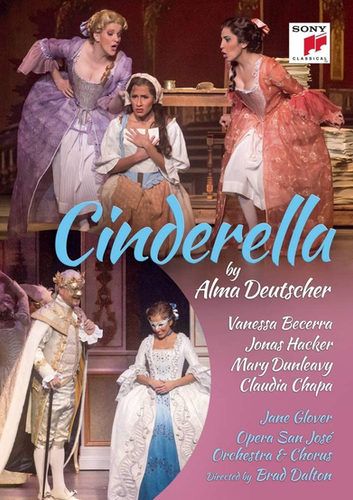
Cinderella is a composer whose stepmother runs an opera house and forces her to work as a copyist. The prince is a poet, derided at court for his artistic leanings and his lack of interest in affairs of state. Cinderella and the prince find one another just as words find their melody. When Cinderella flees from the ball, the prince searches for her not with a glass slipper but with the beginning of her melody, which only she knows how to continue.
Read the full synopsis
Once upon a time, in the Kingdom of Transylvanian, there lived a girl called Cinderella. Her mother died when she was young and she was brought up by her loving father, the manager of the little opera house at the edge of Brasslichmai, the capital city. Cinderella would often entertain her father by singing him the beautiful melodies that sprang into her head. Some years later, her father married again, an ageing prima donna with two daughters of her own, Griselda and Zibaldona. When Cinderella’s father died, Cinderella’s stepmother took over the opera company, and everything changed…
Act I
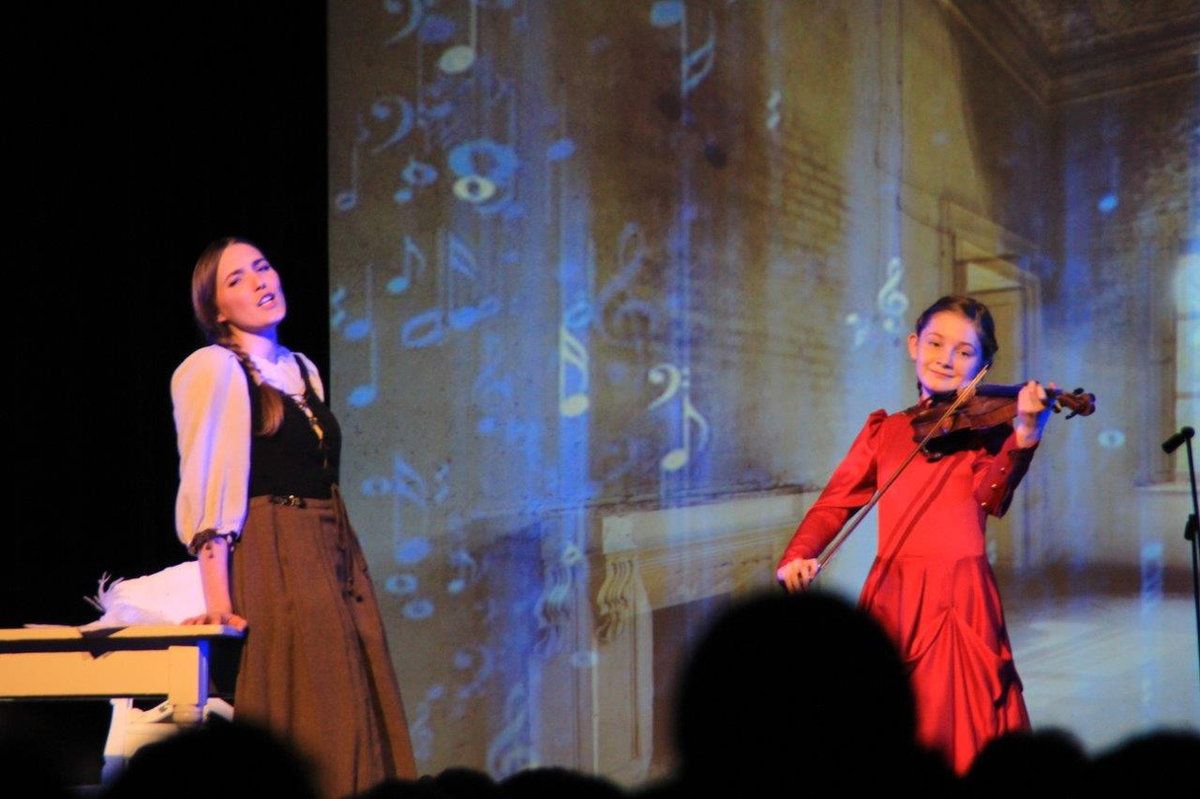
It’s early morning in the opera house. Cinderella has been up all night, copying music for the orchestra rehearsal. She must finish copying all the orchestral parts or her Stepmother will be angry. After working through the night, Cinderella can no longer concentrate on the boring double-bass part, and a beautiful melody springs into her head. The Stepsisters sneer at Cinderella, and the Stepmother is angry that Cinderella hasn’t finished the work on time.
In the palace, the Royal Minister is worried about the King’s failing health and about the Prince, who has not shown any interest in the affairs of the realm, and instead spends his time writing poetry. The King summons the Prince and tells him he must marry and produce an heir, but the Prince wants to find true love. The Prince storms off. The Minister suggests that the King should arrange a masked ball so the Prince can choose his bride. A singing competition will be held as part of the entertainment, to cheer up the poet-Prince.
The agitated Prince flees to the forest, and in despair, is about to throw away his book of poems, but at that very moment he runs into a poor old woman. The woman asks him to help her light a fire. In haughty impatience, the Prince offers her his book of poems as kindling material. When she sees his sash, emblazoned with the royal insignia, she is mortified and apologizes for having disturbed the Crown Prince. Her apology chastens the Prince, who is determined to become a good King and help people in real need.
Shortly afterwards, Cinderella wanders into the forest in search of firewood. She encounters the old woman, who is barefoot. Cinderella offers the old woman her own shoes. In return, the old woman gives Cinderella the book of poems. Cinderella reads one of the poems and is inspired by the words.
The Minister arrives at the opera house, with an invitation to the ball. But he mistakenly hands the Stepmother the doctor’s prescription for the King’s ailments, instead of the invitation. The Stepsisters assume the prescription must be a poem written by the Prince, and conclude that they are expected to sing it at the ball. They try and compose music for the ‘poem’. Cinderella is the only one who is not excited by the prospect of marrying a Prince who writes such silly words. Instead, she opens the book of poems that the old woman gave her, and composes a melody for the poem she had read in the forest. She falls asleep in the middle of writing.
The Stepmother sees Cinderella sleeping at the table and notices the tune that Cinderella had written. She decides to steal the melody and let Griselda sing it at the competition. Cinderella wakes up from a dream about a young poet she met at the ball. She asks her Stepmother to be allowed to go, but the stepmother says there is simply no suitable dress for her.
Act II
A few days later, the Stepsisters are quarreling about who is the more attractive. Cinderella has spent the last few days sewing and mending a dress from the discarded old costumes of the opera house. When the Stepsisters see her dressed for the ball, they tear the outfit off her. The Stepmother tells Cinderella that it would be an insult to the royal family if a ‘beggar girl’ like her came to the Ball.
Cinderella understands for the first time how much her Stepmother and Stepsisters hate her. In despair, she sings a ballad about a lonely girl who hears sweet voices in her mind, enticing her out into the cold night. She goes out into the darkness and runs through the snow, searching for these voices. Finally she collapses in exhaustion, only to hear the voices screaming in her ear: “no one wants a beggar girl!”. Heartbroken, the girl freezes to death.
Meanwhile, from his room in the Palace, the Prince watches the guests arriving. Instead of wearing his splendid royal gown, he decides to put on a very modest garment and remain incognito under his mask.
The old woman arrives at the opera house to return Cinderella’s shoes and reveals herself to be the Fairy. Accompanied by her elves, she conjures up a ball gown and transforms Cinderella’s shoes into the glass slippers.
Intermission
Act III
At the masked ball, a modestly dressed young man asks the Stepsisters to dance but is rudely rejected: they are looking for the Prince. Cinderella enters, and the same young man asks her to dance. During the dance, the two discover how much they like one another.
The Minister announces the singing competition. Griselda starts singing Cinderella’s beautiful tune, but with the words of the doctor’s prescription. Cinderella is shocked that her melody has been stolen and runs out to the balcony. The young man runs out after her. She tells him that she has heard this melody before, but with much more beautiful words. Intrigued, the young man asks Cinderella to sing the song with the original words that she had heard. She sings to him her melody with the real words.
When the young man hears his own words sung to this beautiful tune, it’s his turn to be shocked. After repeated questions, Cinderella admits she was the one who composed the music. The young man reveals that he is the author of the words: Prince Theodor. Cinderella is horrified to discover that her new-found friend is the Prince. She remembers her Stepmother’s admonition: “no one wants a beggar girl!”. The clock strikes twelve, and Cinderella knows she must run away. The Prince tries to hold her back and asks for an explanation. Too scared to reveal her lowly status, she answers enigmatically, by singing parts of the ballad about the beggar girl, and then she flees.
Act IV
The Prince has not slept all night. At dawn the next morning, he is pacing up and down, trying to understand why the mysterious girl fled. He is haunted by the melody that she sang as she ran away, and is convinced that it must be the explanation for her sudden flight. But he only remembers the first few notes and cannot remember how it continued.
The King comes in and cheerfully questions the Prince about the girl he danced with. The King is not amused to discover that the Prince knows nothing about her background and rank, and that he doesn’t even know her name. When the Prince insists that he wants to marry her nevertheless, the King loses patience, and tells him he must find her within a day.
The Prince finally realizes how he can find the girl: he hasn’t seen her face, but he has heard her melody. He will go to every house in the Kingdom and sing the beginning of the song, and only the girl he is looking for will know how to continue it.
Meanwhile, the Stepsisters are in a foul mood because they didn’t manage to find the Prince at the ball. The Stepmother suspects that the mysterious girl at the ball was Cinderella and locks her in the cellar.
The Prince has searched high and low, in every corner of the Kingdom, but no one could continue the song. When he has lost all hope, he runs into the Fairy and her elves. They direct him to the one place at the edge of town which he hasn’t tried yet.
The Prince arrives at the opera house and asks Griselda and Zibaldona to complete the song. He is about to leave when he hears, coming faintly from the basement, the sound of Cinderella’s ballad. He frees Cinderella from the basement.
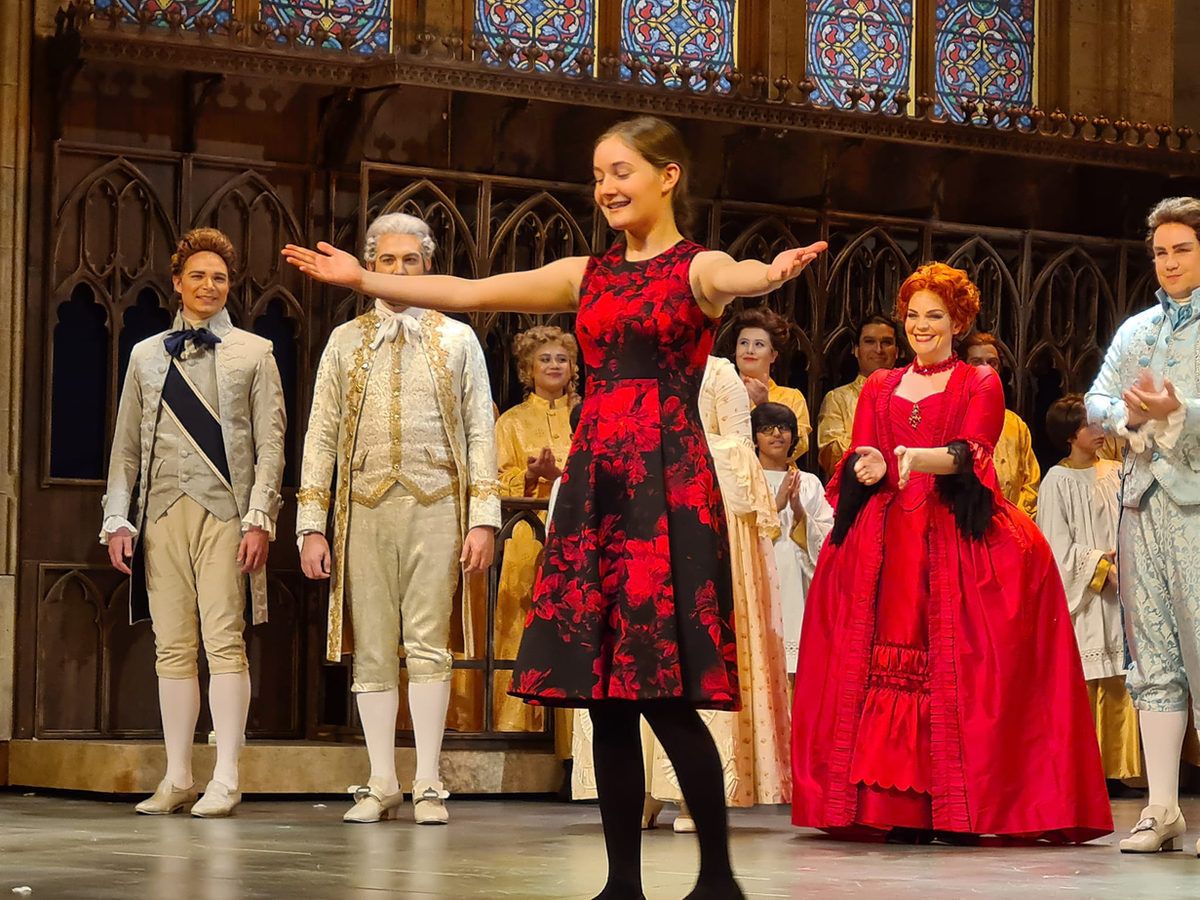
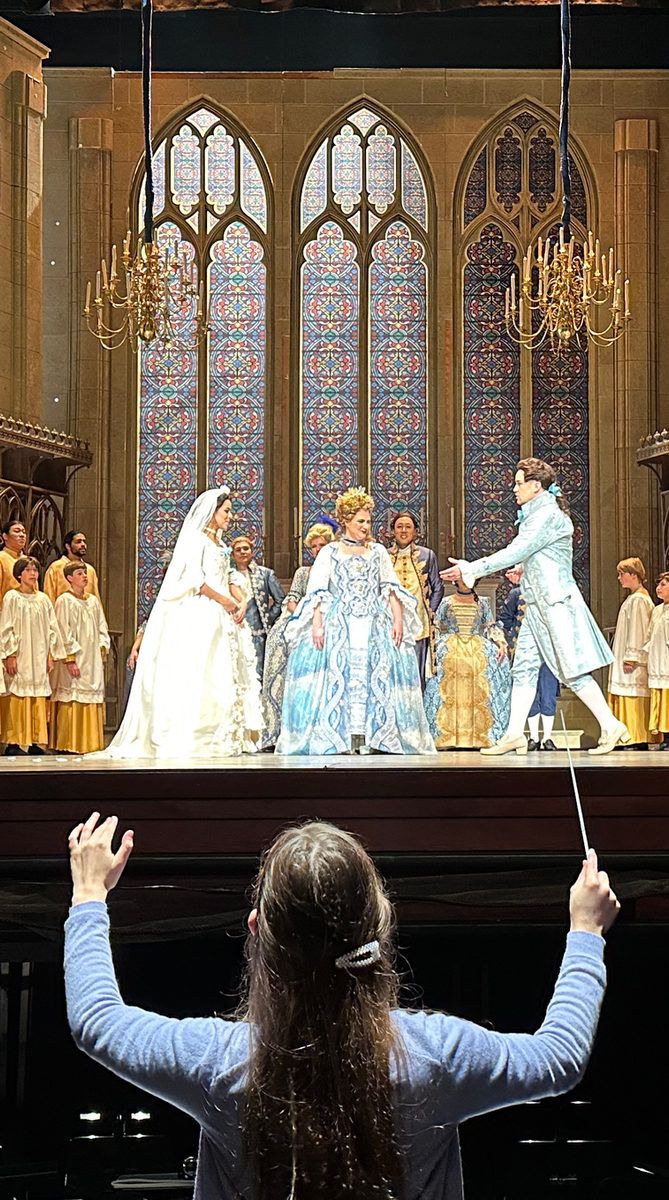
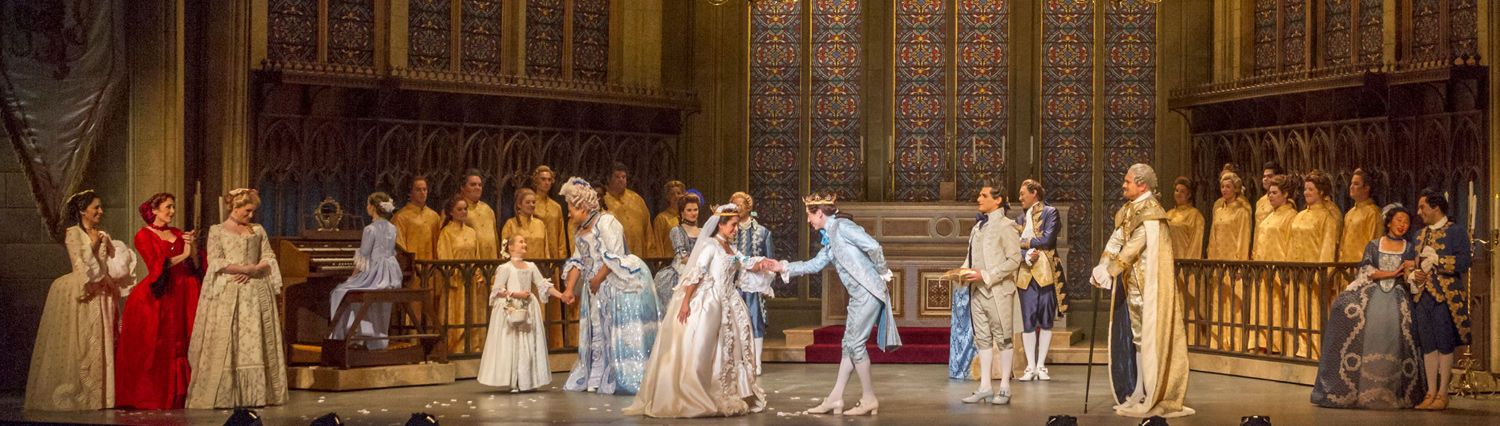
The Prince and Cinderella marry in the Royal chapel.
“How long does it take to write an opera?” Alma’s programme note (PDF)